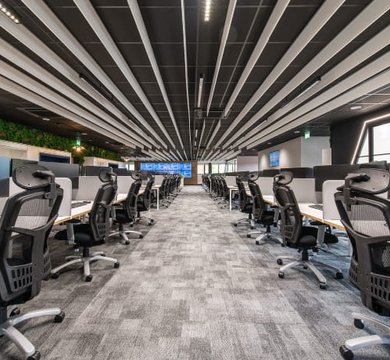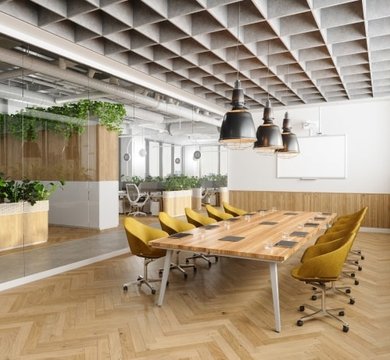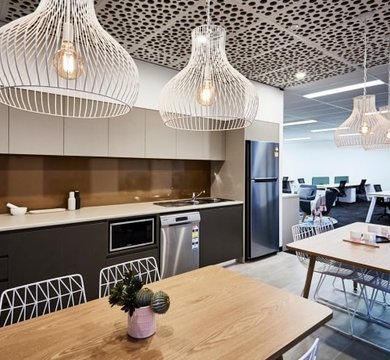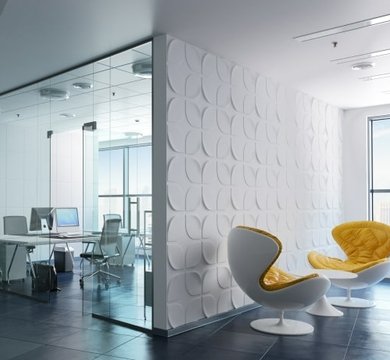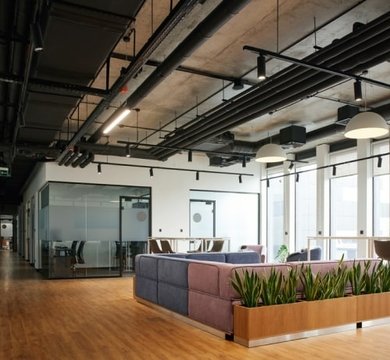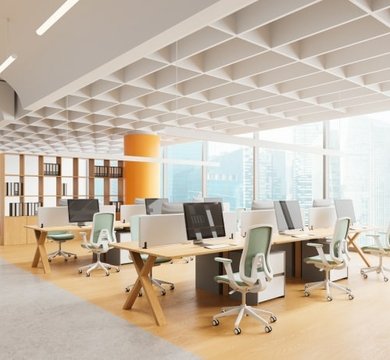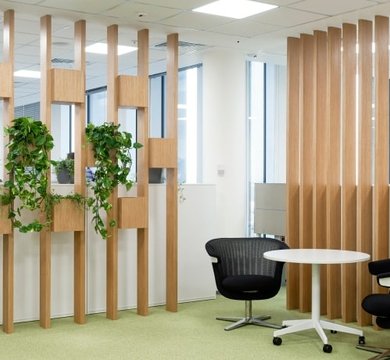
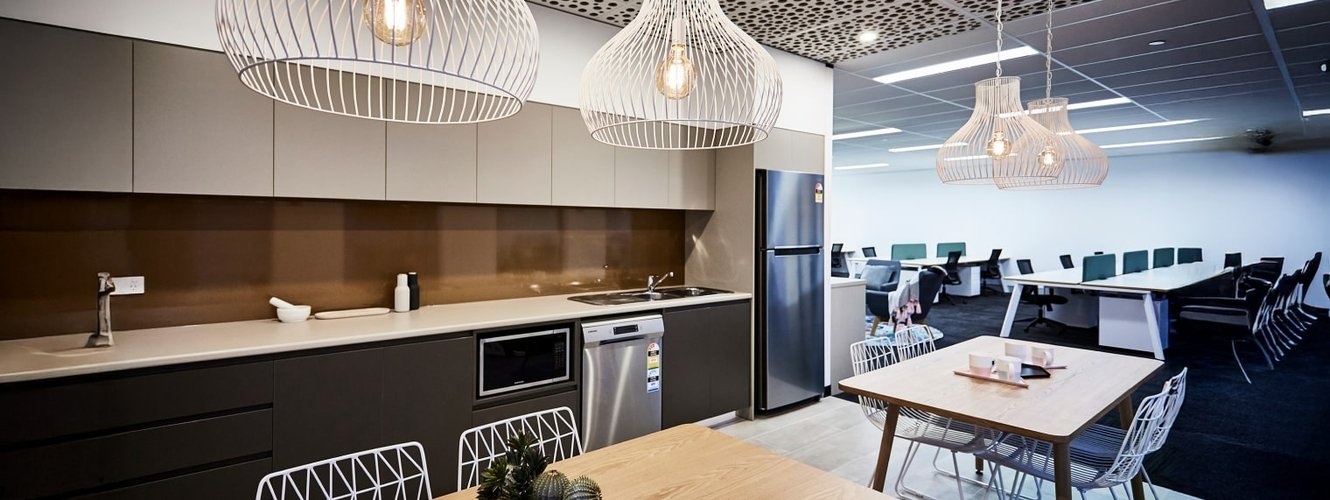
Hybrid office design is the practice of creating an environment that supports both in-office and at-home working. Emphasis is on book-able desks and flexible work zones, and less on rigidity when it comes to how and where people work. The choice of furniture, arrangement of space, technology provision and atmosphere should create a cohesive experience for all employees, whether they are in the office or working remotely. Hybrid workplace design is very people centric and requires businesses to transition away from fixed ways of working towards modern patterns of professional movement.
The benefits of hybrid working office design include
- Staff that are motivated to return to the office
- Improved engagement and productivity within the workplace
- Enhanced sense of wellbeing and improved work-life balance
- Greater job satisfaction and company loyalty
- A desirable environment that will attract and retain talent
6 Core Principles of Hybrid Office Design
Since the CIPD found 18% of employers have experienced an increase in flexible working requests since the introduction of Employment Relations (Flexible Working) Act 2023, and with 41% of employers believing an increase in hybrid working has led to increased productivity/efficiency in their organisation, hybrid working can’t be ignored. Here are the 6 core principles of hybrid office design:
1. Create Diverse Work Zones
A methodical approach to hybrid office space planning will ensure you get all the different zones you need without breaking any UK workplace standards. Engaging with professional office design services will ensure you stay compliant with the Workplace (Health, Safety and Welfare) Regulations 1992 and deliver the hybrid office design employees deserve. Zones can include:
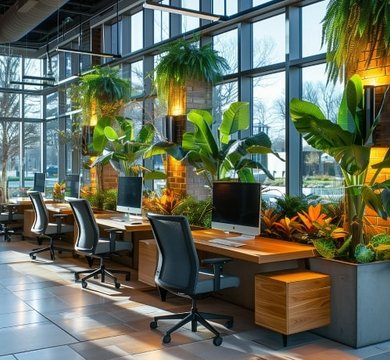
- Open plan areas with bookable desks that create a buzz, facilitate the sharing of ideas and allow employees to freely exchange information
- Private meeting rooms for sensitive conversations and boundary setting
- Dedicated rooms or screened off areas with big tables for group collaboration
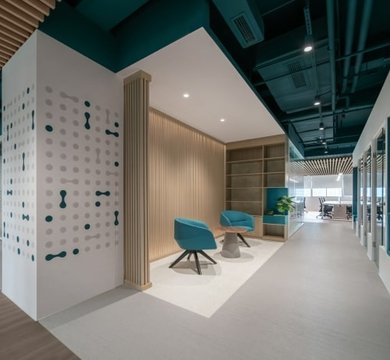
- Individual, well-insulated pods for focused work tasks and quiet time
- Booths with banquette seating and power points for small, informal meetings
- Well-equipped rooms for training, including digital whiteboards and screens
- Break out areas for down time and social gatherings
- One large communal kitchen or café to foster a sense of belonging
- Video conferencing suites for side-by-side work and meetings with remote colleagues
2. Prioritise Flexibility and Adaptability
One of the key hybrid office design principles is flexibility. Workplaces should quickly adapt to varying occupancy rates: Monday could see a full house of employees, while Thursday and Friday may see numbers dramatically drop off. And what if there’s an end-of-the-month department social? Spaces need to be malleable to suit the agenda.
The use of modular furniture and moveable partitions help companies flex in line with changing working patterns. Retractable walls can quickly transform a space. For example, at Lanes Infrastructure’s new headquarters, MPL installed a 22-seat boardroom adjacent to a 10-seat meeting room. A folding wall system between the two rooms can be retracted to create one large training/conference space.
Desks and storage units on castors are also critical if space needs quickly reconfiguring. Full height curtains can also be utilised. When drawn, they can create temporary, private meeting zones – something that’s proved effective at our project No 5 The Heights.
3. Integrate Smart Technology
When Daily Business Group published its 5 Workplace Technology Trends Set to Redefine Business in 2026, smoothing the path of hybrid working featured heavily. It said businesses were investing in systems where data and workflows connect seamlessly, with ‘focus shifting from simply enabling remote access to making hybrid work frictionless’. The aim is to have all communication tools, data and software in one ecosystem that everyone can access with ease, no matter where they are.
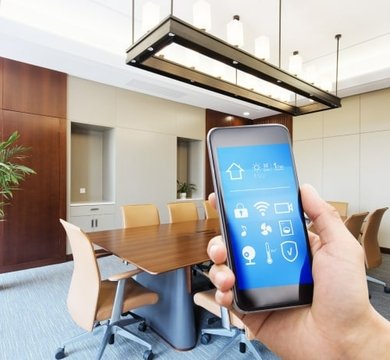
Smart technology also has a vital part to play in the hybrid office layout, especially as the Office for National Statistics found 28% of working adults in Great Britain hybrid worked between January and March 2025. MPL’s blog on smart office solutions is a must read. We explore occupancy sensors that analyse the flow of employees so space and facilities are automatically managed, as well as tech that allows employees to pre-book desks and meeting rooms.
4. Foster Connection and Belonging
Some of the downsides of hybrid working include a sense of detachment and disrupted loyalty – all of which can impact productivity. Our office design for hybrid teams seeks to minimise these feelings and, instead, create working environments where people feel instantly connected and part of a team, no matter how many days a week they’re in the office. A desk booking system is indispensable if there is any essence of hot desking, preventing people from aimlessly wandering around with a laptop, while providing lockers gives employees continuity when it comes to storage.
As office refurbishment specialists with hybrid workplace design a core discipline, we track and implement the very latest layouts – covered in detail in this complete guide to effective workplace design. In it we discuss the concept of department adjacencies. This shifts the arrangement of space away from a random allocation to a purposeful citing of departments next to each other for increased connectivity.
Another pertinent trend in the hybrid office design sector are workplace neighbourhoods. These are multi-use zones designed to increase a sense of belonging and natural connection. They mimic residential neighbourhoods, with a central ‘square’ in the middle for informal interactions, with hot desks, pods, booths and breakout areas arranged around the edge.
5. Optimise for Collaboration
When designing Lanes Infrastructure’s new headquarters, there was a particular focus on cross-department collaboration and many of the solutions we included perfectly illustrate how interactions can be orchestrated by smart hybrid office design.
Inspiration can be taken from the meeting tables that were positioned in front of huge media walls, an aspect designed specifically to facilitate co-working meetings. There’s also several desks with ‘meeting ends’ that allow staff to work in different locations, increasing opportunities to collaborate and giving the ability to accommodate everyone at peak occupancy.
The Lanes’ open plan kitchen is an idea many businesses can steal. Instead of small groups being served by multiple refreshment stations, which can keep employees contained, one central kitchen brings people together. The addition of a six-seater breakfast bar encourages people to linger with a coffee chat or engage in those precious ‘water cooler’ moments.
6. Support Wellbeing and Productivity
Wellbeing in the workplace goes hand-in hand with considered hybrid office design. After all, the greater adoption of hybrid working is so we can achieve a better work-life balance. MPL’s complete guide to creating healthier workplaces documents how 20% of the UK’s workforce don’t feel a sense of belonging at their workplace, while Indeed’s 2022 Working on Wellbeing report found a lack of workplace happiness was the second leading reason employees consider a new opportunity.
Flexible hybrid workplaces need to be inviting and be compelling enough to compete with home comforts. Therefore thought needs to be given to the ergonomics of the hybrid office. Companies may consider fully adjustable chairs and desks that can be altered each time a new worker sets up their station – critical if there’s a hot desking policy in place.
The comfort of the workplace is important too. Natural light, ambient temperature and air quality should be quickly controllable to cope with fluctuating occupancy numbers. And don’t forget biophilic design will help purify the air and positively impact productivity levels, as this article explains.
Implementation Guide: 6 Steps to Hybrid Office Success
It’s the big question: how to design a hybrid office. With a huge portfolio of flexible workplaces under our belt and retail interior design expertise to call on, MPL can share this step-by-step hybrid office design process:
1. Assess current space and hybrid working needs: a workplace audit will establish the size and flow of the workforce, and identify the building’s square footage. An employee survey should follow, with the people who will benefit describing what would help their productivity and happiness.
2. Define work zones and space allocation: the goal will be to balance quiet, acoustically-controlled areas, such as pods, small collaborative spaces, booths and meeting rooms (boardrooms, training rooms and private offices) with open plan floors and communal areas that double as social spaces, such as kitchens and games rooms.
3. Select flexible furniture and technology: any hybrid working office design will need a fresh approach to furniture and technology. Anything that’s fixed will hinder flexibility, so focus on what can be wheeled away, repositioned or retracted. Technology upgrades may be required, such as data and networking, especially to supply video conferencing and in-office sensors.
4. Plan phased implementation approach: if your office is already hybrid, you should be able to schedule work for when occupancy is low or even temporarily switch to a fully remote period during a fit out. If you’re at the start of your hybrid journey, smart scheduling will minimise disruption and allow your office to keep functioning.
5. Train employees on new systems: preparing a training schedule ahead of your hybrid office launch will help staff feel in control, especially if you’re switching to a booking system for desks and meeting rooms, or installing a sensor-led HVAC system.
6. Monitor and optimise based on usage data: a follow-up employee survey is a great way to measure satisfaction and success. Businesses may, however, choose to monitor occupancy rates to see if staff are more inclined to work in the office post hybrid refit.
Essential Technology for Hybrid Offices
- Desk and room booking systems: cloud-based systems that can be accessed by everyone and operated using an app
- Smart lighting and climate control: sensors that automatically adjust the ambient atmosphere – heat, air quality and light – based on occupancy levels in pre-set rooms or areas
- Video conferencing and collaboration tools: audio visual equipment that seamlessly integrates into existing work apps, and that also produces high quality video and audio
- Security and access control systems: integrated surveillance systems, RFID tags and biometric access control systems, such as fingerprint scanners, iris recognition and facial recognition, for safer ad-hoc premisesaccess.
- Wifi connectivity:a professional fibre service with wired Ethernet connections, WPA3 encryption and business-grade access point system that eliminates dead zones anddrop outs.
Frequently Asked Questions
What is the difference between hybrid and traditional office design?
Desks, partitions and storage tend to be fixed in a traditional office design, with everyone having a set place to work. A hybrid office design accommodates those who work in multiple locations, with hot desking, bookable rooms and multi-use areas.
How much space do you need for a hybrid office?
There is no minimum or maximum space requirement for a hybrid office. An office refurbishment company like MPL Interiors can take the existing footprint of an office, and reapportion the space based onhybrid working practices and occupancy rates.
What technology is essential for hybrid office design?
Video conferencing is often the number one requirement as it connects employees in the office to those who are working remotely. If occupancy rates fluctuate hourly, sensors that automatically adjust light, heat and air quality should be considered.
How do you manage hot-desking in a hybrid office?
Hot desking can replace allocateddesks but it works best if employees can arrive at the office knowing there is a desk for them to use. As such, a cloud-based, app-operated live desk booking system is advised.
What are the costs of implementing hybrid office design?
The cost of a hybrid office depends on a number of variables, including size, specification,structural workrequired, the amount of new furnitureneeded and any data/networking necessities. A basic refurbishment can start at £30 per square foot.